
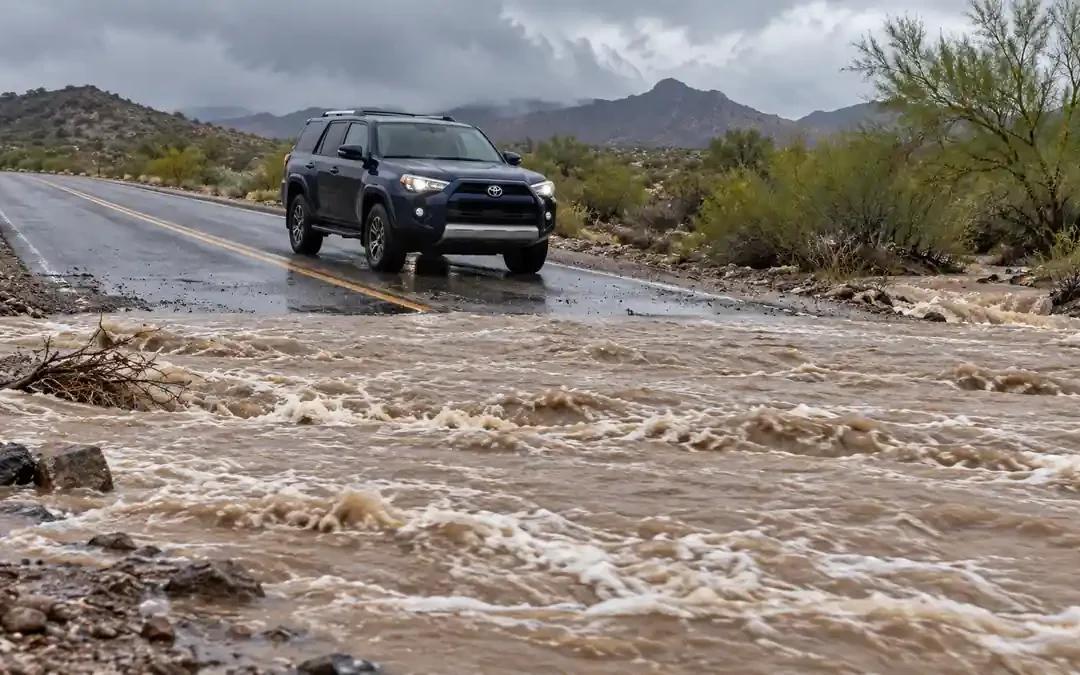
Flooded roads in Arizona can put you and your vehicle at risk. Understanding how to stay safe in wet weather is essential. Arizona may be known for sunshine and dry desert landscapes, but when rain arrives, road conditions can change quickly. What starts as a light shower can turn into heavy rainfall, reduced visibility, slippery pavement, and dangerous flooding.
One of the most important things to remember is simple: Never attempt to drive through a flooded road, even if the water appears shallow.
Why Arizona Roads Can Become Dangerous When It Rains
During dry weather, oil, dirt, dust, and other debris accumulate on road surfaces. When rain begins, these materials can mix with water, creating slippery driving conditions.
The first rainfall after an extended dry period can be particularly hazardous.
Wet pavement reduces tire traction and can increase stopping distances. Drivers may also encounter:
-
Reduced visibility from heavy rainfall and road spray.
-
Standing water in intersections and low-lying areas.
-
Unexpected flooding in washes and underpasses.
-
Vehicles hydroplaning or losing traction.
-
Sudden braking and increased risks of rear-end collisions.
Even experienced drivers can find themselves in dangerous situations when road conditions change unexpectedly.
Think That Flooded Road Is Safe to Cross? Think Again.
One of the biggest mistakes drivers make during heavy rain is assuming they can safely cross a flooded roadway.
Water covering a street may look shallow, especially when other vehicles have already driven through it.
However, appearances can be deceiving.
Floodwater may conceal damaged pavement, debris, washed-out sections of roadway, or unexpectedly deep areas.
Just 6 inches of fast-moving water can knock an adult off their feet, and approximately 12 inches of moving water can carry away many passenger vehicles.
Larger vehicles, including trucks and SUVs, are not immune to the dangers of moving floodwater.
When water begins flowing across a roadway, the safest decision is to turn around and find another route.
Turn Around, Don’t Drown
The National Weather Service promotes an important safety message:
TURN AROUND, DON’T DROWN.
This simple reminder can save lives.
If you encounter a flooded roadway:
-
Never drive around barricades or road closure signs.
-
Do not assume the water is shallow enough to cross.
-
Avoid flooded washes, dips, and underpasses.
-
Never follow another vehicle into floodwater.
-
Turn around and choose an alternate route.
Remember, just because another vehicle makes it through does not mean yours will.
No appointment, errand, or destination is worth risking your safety.
What Happens When Water Enters Your Vehicle?
Driving through standing or moving water can cause significant damage to a vehicle, even when the exterior appears unaffected.
Depending on the depth of the water and the vehicle’s design, potential problems may include:
Engine Damage: Water entering the engine’s air intake can cause severe internal damage, potentially resulting in engine failure.
Electrical Problems: Modern vehicles contain numerous electronic components, computers, sensors, and wiring systems that can be affected by water exposure.
Interior Damage: Water entering the passenger compartment can damage carpeting, upholstery, insulation, and electrical components.
Hidden Corrosion: Moisture trapped in areas that are difficult to access may contribute to corrosion and additional problems over time.
A vehicle that continues running after driving through water may still have damage that isn’t immediately noticeable.
If your vehicle has been exposed to floodwater, having it evaluated by qualified professionals is important.
How to Stay Safer When Driving in Heavy Rain
When rain is unavoidable, taking a few precautions can help reduce the risk of an accident.
-
Slow Down: Reduce your speed to account for wet pavement and decreased traction.
-
Increase Following Distance: Give yourself additional room to stop safely.
-
Turn On Your Headlights: Improve your visibility to other drivers.
-
Avoid Sudden Movements: Abrupt braking, accelerating, or steering can increase the risk of losing control.
-
Watch for Standing Water: Water accumulating on roadways can increase the risk of hydroplaning.
-
Avoid Unnecessary Travel: When conditions become severe, consider waiting until the weather improves.
Most importantly, remain alert and never underestimate rapidly changing weather conditions.
What If Your Vehicle Is Damaged During a Storm?
Even cautious drivers can experience accidents when weather conditions deteriorate.
Heavy rain, reduced visibility, and slippery roads can contribute to collisions that result in bumper damage, body damage, and other repair needs.
At SWC Auto Body Group, we understand how stressful an unexpected accident can be.
Our experienced team is committed to quality collision repairs, attention to detail, and helping customers navigate the repair process with confidence.
As a family-owned business, we take pride in offering a personalized, boutique-style experience where customers receive the attention and communication they deserve.
With locations serving Surprise, El Mirage (Dysart), Mesa, and Prescott, we’re here to help Arizona drivers get back on the road following an accident.
Your Safety Always Comes First
Arizona weather can change quickly, and a roadway that appears safe one moment may become dangerous minutes later.
Before heading out during heavy rain, check weather conditions, allow extra travel time, and remain aware of potential flooding.
If you encounter water covering the road, remember:
Turn Around, Don’t Drown.
Your vehicle can be repaired or replaced. Your safety and the safety of your passengers are what matter most.
If your vehicle has been involved in a collision, contact SWC Auto Body Group to learn how our team can assist with your collision repair needs.